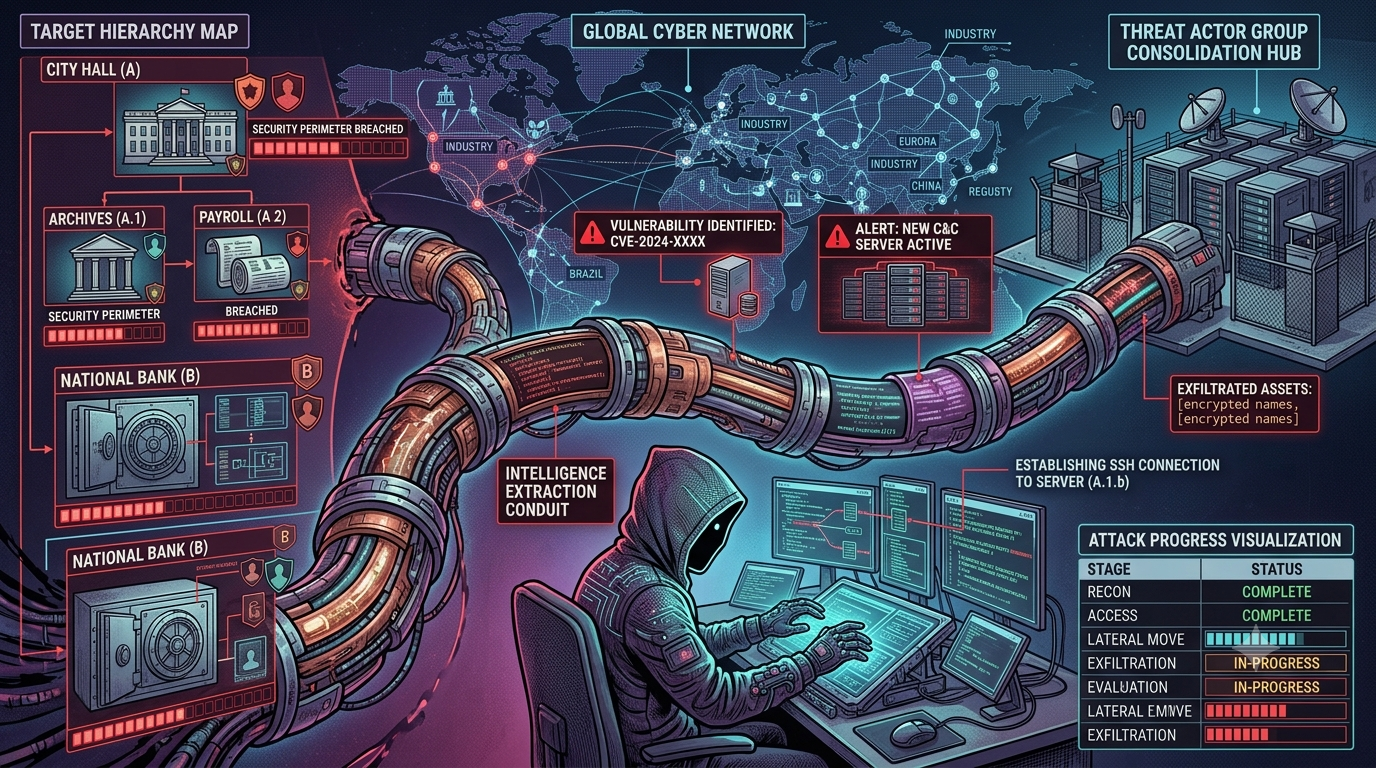
Trivy supply chain attack spreads: Docker Hub, GitHub, and Kubernetes all affected

Overview
Cybersecurity researchers have discovered more malicious artifacts on Docker Hub related to a supply chain attack targeting the vulnerability scanner Trivy. This incident not only involves malware distribution but also extends to CI/CD pipelines, internal GitHub organizations, and Kubernetes infrastructure, indicating a serious level of spread. The last confirmed safe version of Trivy is 0.69.3. Versions:
0.69.4 (removed)
0.69.5
0.69.6
all contain malware and are no longer safe to use.
Docker Hub exploited to distribute malware
The malicious Trivy images (0.69.5, 0.69.6) were pushed to Docker Hub without corresponding releases on GitHub, indicating clear signs of a breach.

Analysis shows these images contain:
Fake C2 domain: scan.aquasecurtiy.org (typosquatting)
File exfiltration: payload.enc, tpcp.tar.gz
Link to GitHub repo backdoor: tpcp-docs-*
Notably, even though these images have been removed, they still persist through cache/mirror (e.g., mirror.gcr.io), causing many pipelines to inadvertently pull the malicious version.

Nguồn gốc: Tấn công GitHub Actions của Trivy
The attack originated from:
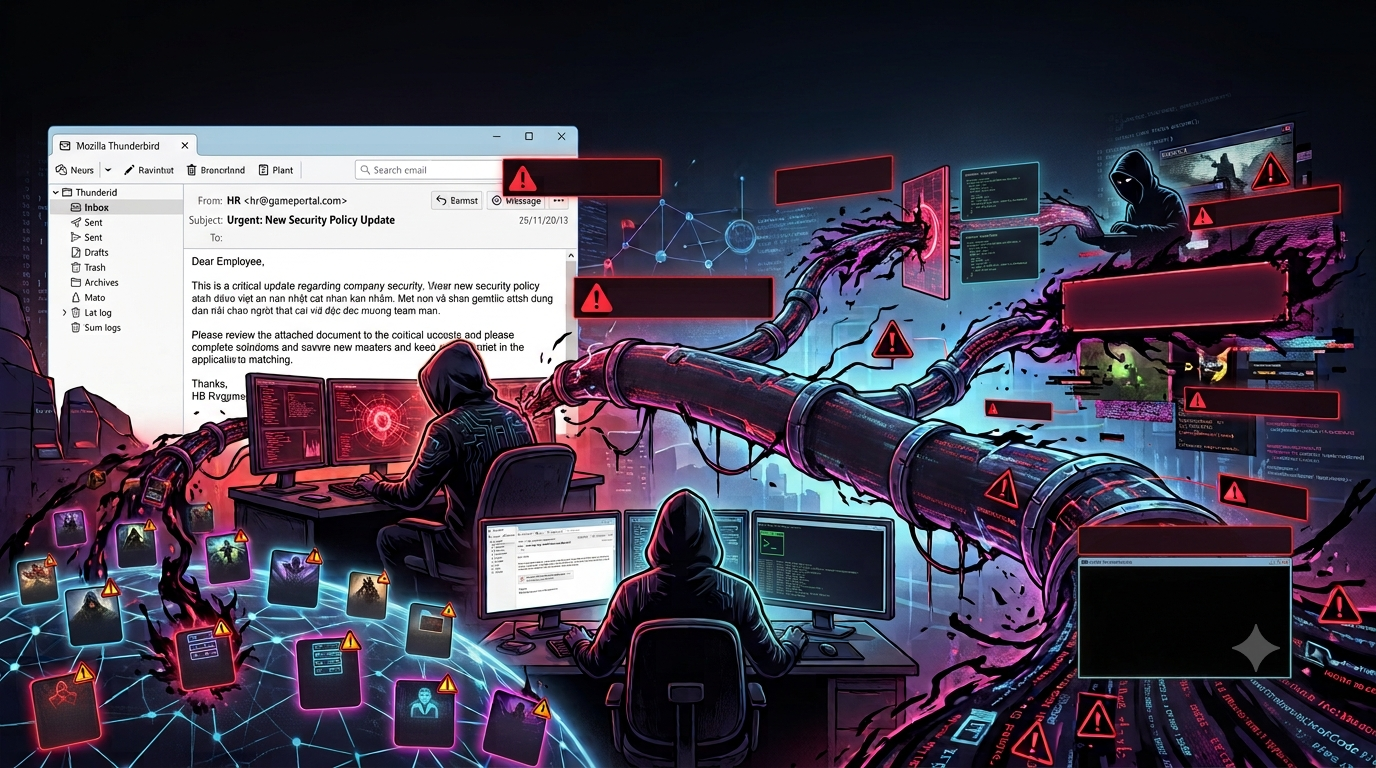
The attacker took over Trivy's GitHub Actions
Injected credential-stealing code into:
aquasecurity/trivy-action
aquasecurity/setup-trivy
This payload is designed to:
Collect GitHub tokens
Obtain SSH keys
Extract cloud credentials
Gather environment variables from CI runners
Escalation: From token theft to taking over GitHub organizations
A significant escalation step was the attacker using the stolen token to take over the internal GitHub organization aquasec-com.
Consequences:
44 repositories were:
Rename en masse with the prefix tpcp-docs-
Change description to: "TeamPCP Owns Aqua Security"
Make all public
Notably:
The entire action took place in about 2 minutes (20:31 → 20:32 UTC, 03/22/2026) → proving:
The attack was fully automated (scripted via GitHub API)
Thoroughly prepared in advance.
Core weakness: Service account was compromised
The trace origin shows:
- Account was compromised: Argon-DevOps-Mgt

This is a service account using a long-term token (PAT)
Has access to both organizations:
aquasecurity (public)
aquasec-com (internal)
=> Just one leaked token can lead to the entire system being compromised.
Signs of reconnaissance before the attack
7 hours before the defacement:
Attacker created and deleted a "ghost" branch.: update-plugin-links-v0.218.2
No workflow triggered
No actual release exists
=> This was a test of the token to check access rights without drawing attention.
Expansion: Worm, npm packages, and wiper malware
After obtaining the credential:
1. Spread worm (CanisterWorm)
Infects through npm packages
Spreads within the dev ecosystem
Uses ICP (Internet Computer) as C2
2. Wiper malware “kamikaze”
Payload mới nguy hiểm hơn:
Main target: Kubernetes clusters (especially in Iran)
Behavior:
Deploy DaemonSet across the entire cluster
Iran Node:
Wipe completely (rm -rf /)
Force reboot
Other Nodes: Install backdoor (systemd service)
3. Attack cloud infrastructure
TeamPCP also:
Exploit Docker API (port 2375)
Attack Redis, Ray dashboard
Use a stolen SSH key
Deploy:
Cryptomining Ransomware
Data exfiltration
Threat Actor: TeamPCP
TeamPCP (aka DeadCatx3, PCPcat, ShellForce) is a cloud-native attack group with increasingly advanced capabilities.
Key features:
Specializes in:
Kubernetes
Docker
CI/CD pipelines
Pioneer: Worm uses ICP as C2
Tactics:
Supply chain attack
Credential harvesting
Large-scale automation
Scope of impact
Not only the official image is affected.
Images:
CI/CD rebuild from Trivy
Fork / derivative
=> May have indirectly infected with malware
Recommendations
FPT Threat Intelligence provides the following recommendations that must be implemented immediately:
Do not use Trivy versions above 0.69.3
Rotate all:
GitHub tokens
SSH keys
Cloud credentials
Check CI/CD runners:
/tmp/pglog
Connect to ICP domain
More secure configuration
Pin GitHub Actions using commit SHA (avoid using tags)
Use short-lived tokens
Apply least privilege
Monitor pipeline like production
Check the system
Audit all:
CI/CD pipelines
Recently pulled Docker images
Check:
Kubernetes clusters
Docker API public (port 2375)
Conclusion
This is a prime example of a "long-tail supply chain attack":
A previously stolen credential
Reused for:
Take over GitHub org
Distribute malware
Attack cloud infrastructure
This shows that the biggest weakness isn't a technical vulnerability, but rather:
Service account with overly broad permissions + long-lived token