Open Directory, Open Season: Inside Red Lamassu's JFMBackdoor

Executive Summary
A misconfigured open directory did what years of stealth could not: it handed threat hunters the full toolkit of Red Lamassu (also tracked as Calypso and Bronze Medley), a China-nexus espionage group that PwC has followed since 2019. On 21 May 2026, PwC Threat Intelligence and Lumen's Black Lotus Labs published coordinated research — PwC on the Windows side, Lumen on the Linux side — exposing a paired implant set: a fully featured Windows backdoor named JFMBackdoor, and a Linux post-exploitation framework called Showboat (PwC's kworker; Kaspersky's EvaRAT).
For a telecom or critical-infrastructure operator the business risk is not a single intrusion but long-dwell espionage: Red Lamassu's objective is a persistent foothold for years of intelligence collection, and its tooling turns a compromised carrier into a launch pad into deeper, internal networks. Confirmed targeting clusters around telecommunications and government entities in Kazakhstan, Afghanistan, and India, with related activity reported across the wider Asia-Pacific.
The single most important action: hunt for anomalous DLL side-loading from
%TEMP% and for the host artifact C:\Users\public\jfm — both are reliable
fingerprints of this intrusion chain.
Discovery & Timeline
Red Lamassu's operational security slipped between July and October 2025,
when PwC observed an open directory hosted on 23.27.201[.]160. Most of the
files in it were links in a single connected infection chain; two outliers —
clear (a Linux log-tampering utility) and systemd-ac-update (a Showboat/
kworker sample) — pointed straight at the group's cross-platform operations.
| Date | Event |
|---|---|
| 2019 | PwC begins tracking Red Lamassu / Calypso [NEEDS VERIFICATION: other trackers date the group to September 2016 — see References] |
| Jul–Oct 2025 | Open directory active on 23.27.201[.]160 |
| 21 May 2026 | Coordinated disclosure — PwC (JFMBackdoor / Windows) + Lumen Black Lotus Labs (Showboat / Linux) |
The C2 infrastructure has a much longer tail. A TLS certificate tied to the C2
domain newsprojects[.]online was observed across multiple hosts stretching
back to 2023, indicating the campaign infrastructure predates the leaked
directory by years.
Threat Actor Profile — Red Lamassu (Calypso)
Red Lamassu is a China-based actor that PwC assesses as likely operating out of Sichuan Province (other reporting ties the C2 infrastructure to Chengdu, the provincial capital). The group leans on a mix of bespoke and shared tooling to establish and keep a long-term foothold for intelligence collection.
A few characteristics make it stand out for defenders:
- Quiet geography. Its targeting concentrates on regions where Western security vendors have thinner visibility — Afghanistan, Kazakhstan, India, with related reporting naming Thailand and Turkey — which is part of why the group stayed lightly documented for years.
- Shared "quartermaster" tooling. Red Lamassu has historically used PlugX, a family widely shared across China-nexus groups, and Showboat sits in the same shared ecosystem alongside frameworks like ShadowPad. That resource pooling is a recurring signature of China-nexus operations and complicates clean attribution.
- Cross-platform. The pairing of a Windows backdoor (JFMBackdoor) with a Linux framework (Showboat) lets the group operate comfortably across the mixed estates typical of telecom environments.
Attack Flow — DLL Side-Loading Chain
The Windows chain is a textbook DLL side-loading sequence built around a
legitimate signed binary. PwC notes one quirk: the dropper 1.bat will not
run as-is — but every command inside it works when run individually, suggesting
the script is meant to be passed through an obfuscator before deployment.
flowchart TD
    A["1.bat (dropper)<br/>PowerShell -WindowStyle Hidden"] -->|Invoke-WebRequest| B["%TEMP%<br/>flt.bin · FLTLIB.dll · scr.mui · fltMC.exe"]
    B --> C["fltMC.exe<br/>(legitimate signed binary)"]
    C -->|DLL side-loading| D["FLTLIB.dll<br/>(malicious loader)"]
    D -->|XOR decrypt — key Zs0@31=KDw.*7ev| E["scr.mui<br/>(encrypted config)"]
    D -->|load in memory| F["flt.bin<br/>(shellcode stub)"]
    F -->|decode + reflective load| G["JFMBackdoor<br/>(Win32 DLL, in-memory PE)"]
    G -->|TCPSession / WSSession / WSSSession| H["C2: namefuture[.]site"]
Step by step:
1.batuses a hidden PowerShell window to pullflt.bin,FLTLIB.dll,scr.muiandfltMC.exeinto%TEMP%, then launchesfltMC.exe.fltMC.exeis a legitimate executable that side-loads the attacker'sFLTLIB.dll.FLTLIB.dllopensscr.muiand XOR-decrypts it with the keyZs0@31=KDw.*7ev. The file format is a series of records: four bytes of an XOR-encrypted length, followed by the encrypted blob. The decrypted config is shared by bothFLTLIB.dlland the final payload.FLTLIB.dllthen loadsflt.bin— a shellcode stub — into memory and executes it.flt.bindecodes and reflectively loads the final embedded PE: a ~1.12 MB Win32 DLL that is JFMBackdoor itself. Decryptedscr.muiconfiguration revealed hardcoded paths and a C2 domain in two observed sample sets:
# Sample set 1
flt.bin · FLTLIB.dll · fltMC.exe
C:\Program Files (x86)\Windows Mail\wabmig.exe
C:\ProgramData\Microsoft\Network
SOFTWARE\Microsoft\Windows NT\CurrentVersion\Windows
namefuture[.]site

# Sample set 2 (additional sample)
sl.bin · sllauncherloc.dll
C:\Windows\SysWOW64\msdt.exe
C:\ProgramData\Microsoft\Network
en[.]cumm[.]info · xcent[.]online · cumm[.]info
Inside JFMBackdoor
The backdoor takes its name from a hardcoded path inside the malware,
C:\Users\public\jfm. It is built on the CppServer library and drives its
operations through the TCPSession, WSSession and WSSSession classes,
talking to its C2 at namefuture[.]site.
Capabilities are extensive and map cleanly onto a full-spectrum espionage implant:
| Capability | Detail |
|---|---|
| Remote shell | Two reverse-shell variants. The second launches suspended, then uses FreeConsole + AttachConsole to detach from the console and evade inspection by other processes. |
| File system | Read/write/copy/move/delete files and folders, recursive directory listing, pattern-based file search, file execution, timestomping (SetFileTime), and attribute modification. |
| Network proxying | Establishes TCP proxy sessions — turning the host into a pivot. |
| Process & service mgmt | Enumerate / create / terminate processes; enumerate / start / stop / delete Windows services. |
| Network recon | Reads TCP/UDP connection tables (GetExtendedTcpTable / GetExtendedUdpTable) and can manipulate TCP entries (SetTcpEntry). |
| Registry | Full CRUD — enumerate, create, modify, rename, delete keys and values. |
| Screenshot capture | Uses GDI+ (gdiplus.dll), then Base64-encodes and XOR-encrypts the image before writing it to disk for exfil. |
| Self-management | Creates/reloads encrypted config and services, and can uninstall itself (registry, services, on-disk file) for anti-forensics. |
| Config management | Stores/reloads encrypted config from scr.mui and btasc.cfg, letting the operator update behavior dynamically. |
Selected command codes (highlights)
JFMBackdoor dispatches a command + sub-command structure. Selected entries from PwC's full table (Appendix B in the original report):
| Command | Sub | Action |
|---|---|---|
0xD |
0xA |
Reverse shell via CreatePipe + CreateProcessW |
0xAD |
0xA |
Stealth reverse shell — launched suspended, then FreeConsole/AttachConsole to evade inspection |
0xE |
0x10 |
Timestomp a file (SetFileTime) |
0xF |
0x1 |
Begin TCP proxy session |
0x11 |
— | Uninstall self (registry, services, terminate, delete from disk) |
0x20 |
0x0 |
Gather TCP/UDP tables (GetExtendedTcpTable / GetExtendedUdpTable) |
0x30 |
0x0 |
Create C:\Users\public\jfm folders, write btasc.cfg config |
0x41 |
0x1 |
Registry write (RegSetKeyValueW) |
0xCE |
0x2 |
Screenshot via gdiplus.dll, saved Base64-encoded + XOR-encrypted |
0xCF |
0x0 |
Reload configuration from scr.mui |
0xF1 |
0x1 |
Delete a Windows service (DeleteService) |
C2 Infrastructure — How PwC Tied It Together
JFMBackdoor and its companion samples used four C2 domains: namefuture[.]site,
cumm[.]info, en[.]cumm[.]info, and xcent[.]online, all fronted by
Cloudflare. PwC pivoted off TLS certificates to peel back the Cloudflare layer
and connect the Windows backdoor to the Linux Showboat infrastructure.
flowchart LR
    subgraph JFM["JFMBackdoor (Windows)"]
        D1["namefuture[.]site"]
    end
    subgraph KW["Showboat / kworker (Linux)"]
        D2["newsprojects[.]online"]
    end
    D1 -->|Cloudflare Origin cert| IP1["166.88.11[.]196"]
    D1 -->|DNS| IP2["139.180.223[.]193"]
    IP1 -->|same cert serves| D2
    IP2 -->|same cert serves| D2
    D2 -->|DNS| IP3["64.227.128[.]21"]
    D2 -->|DNS| IP4["23.27.201[.]115"]
    IP4 -->|also resolves| D3["xcent[.]online"]
    OMO["Cert O=My Organization<br/>fp 27df4756...0c677"] -->|hosted on| IP5["195.86.120[.]2"]
    IP5 -->|alongside| AFG["Afghan gov cert +<br/>Afghan telco DC cert"]
Two pivots did the heavy lifting:
- The Cloudflare Origin certificate for
namefuture[.]sitewas served by166.88.11[.]196(with an additional DNS resolution to139.180.223[.]193). Those same IPs also served a Cloudflare certificate fornewsprojects[.]online— the C2 of an observed kworker/Showboat sample — directly linking the Windows and Linux sides. - A self-signed certificate with subject
O=My Organization(fingerprint27df4756...0c677) was hosted on195.86.120[.]2, an IP that also hosted a legitimate certificate for an Afghan government entity and a certificate associated with a domain controller belonging to an Afghan telecommunications provider — a strong targeting signal, reinforced byFLTLIB.dllbeing uploaded to a multi-AV scanner from a submitter in Afghanistan.
IOCs
Authoritative IOCs are published by PwC on GitHub (see References). The list below is reproduced for convenience.
# === SHA-256 — open directory (23.27.201[.]160) ===
systemd-ac-update  a05fbe8734a5a5a994a44dee9d21134ad7108d24ab0749499fe24fc4b36c4cbc
FLTLIB.dll         047307aca3a94a6fc46c4af25580945defb15574fb236d13d2bb48037cc42208
clear              ac50887e2c513b50b2170d77441b9f7e8afcc774df6b54fdd8aac863095239f4
1.bat              a23d126f0446755859e4d81c0c9b50b65e0062c3de2a014c543f6b263321ad78
scr.mui            ea57b5768c84164fcdb25bb8338d660c5586e17e37cee924c4e5a745510925f3
fltMC.exe          cbef2064cf49b4b27dbf7d0c88c8f7bcdd6a7f25ee9c087beacb48cdd1b78731
flt.bin            b77a233735ff237ab964d2bdb3f6d261a90efb2f86dcde458c419cee528686a9

# === SHA-256 — JFMBackdoor payload (in-memory PE) ===
JFMBackdoor        176aec5d33c459a42e7e4e984a718c52e11213ef9a6aa961b483a836fc22b507

# === SHA-256 — additional samples sharing XOR key Zs0@31=KDw.*7ev ===
CiWinCng32.dll     b118f74dc2b974678a50349d04686f6b2df4b287a69e40c4513cd603c7271793   (KZ)
scr.mui            1003bc9e3650fd290e44fd79b270c1b29f572fbb7647fa2bbf1f600d53673b53   (CN)
sllauncherloc.dll  f820e4e4c5d433714842f6d64d1a8773958f782cde8d27f6a54d4f9862598933   (CN)

# === Network — C2 domains ===
namefuture[.]site
cumm[.]info
en[.]cumm[.]info
xcent[.]online
newsprojects[.]online      (kworker/Showboat C2)

# === Network — IPs ===
23.27.201[.]160     (open directory)
23.27.201[.]115     (resolves xcent[.]online)
166.88.11[.]196
139.180.223[.]193
64.227.128[.]21
166.88.99[.]32
66.42.49[.]27
45.76.157[.]243
207.90.205[.]55
193.124.93[.]153
152.32.159[.]11
195.86.120[.]2      (O=My Organization cert host)

# === Host-based ===
Folder    C:\Users\public\jfm   (and \ProgramData, \UnistoreDB subfolders)
File      btasc.cfg             (encrypted config)
File      scr.mui               (encrypted config)
Pattern   fltMC.exe + FLTLIB.dll executed from %TEMP%

# === Crypto ===
XOR key   Zs0@31=KDw.*7ev       (scr.mui / config decryption)

# === TLS certificate fingerprints ===
27df475626aafce2ea1548a9f35efb9ad951298c8b11a6adb3ccdfcd5170c677   (O=My Organization)
5e86298e3a62404ee4b019246d8da7a7451ba8f9c1f956c32ea4a0ff4e43f553   (namefuture[.]site, Cloudflare)
8b0e14e0684e00aee9cbf4fd22b2a5da08443f9a0f9ace4972803e29050bcc69   (newsprojects[.]online, Cloudflare)
MITRE ATT&CK Mapping
Analyst mapping derived from PwC's technical description; this is our mapping, not an official PwC Navigator layer.
| Tactic | Technique | ID | Evidence |
|---|---|---|---|
| Execution | PowerShell | T1059.001 | 1.bat runs hidden PowerShell |
| Execution | Windows Command Shell | T1059.003 | Reverse shell via cmd |
| Execution | Service Execution | T1569.002 | sc start, service launch |
| Command & Control | Ingress Tool Transfer | T1105 | Invoke-WebRequest pulls payloads |
| Defense Evasion | DLL Side-Loading | T1574.002 | fltMC.exe side-loads FLTLIB.dll |
| Defense Evasion | Deobfuscate/Decode Files | T1140 | XOR-decrypt scr.mui |
| Defense Evasion | Reflective Code Loading | T1620 | flt.bin loads PE in memory |
| Defense Evasion | Obfuscated Files or Information | T1027 | XOR config, Base64+XOR screenshots |
| Defense Evasion | Indicator Removal: Timestomp | T1070.006 | SetFileTime |
| Defense Evasion | Indicator Removal: File Deletion | T1070.004 | Self-uninstall from disk |
| Defense Evasion | Modify Registry | T1112 | Registry CRUD |
| Defense Evasion | Hide Artifacts | T1564 | Detached-console reverse shell |
| Discovery | Process Discovery | T1057 | Process enumeration |
| Discovery | System Service Discovery | T1007 | Service enumeration |
| Discovery | System Network Connections Discovery | T1049 | TCP/UDP tables |
| Collection | Screen Capture | T1113 | GDI+ screenshot |
| Command & Control | Proxy | T1090 | TCP proxy session |
| Command & Control | Web Protocols | T1071.001 | WS/WSS C2 sessions |
The Bigger Picture — JFMBackdoor vs BPFdoor
JFMBackdoor is best understood as one piece of a broader China-nexus push into global telecoms. The contrast with BPFdoor — the kernel-resident Linux implant that Rapid7 attributes to a different group, Red Menshen — is instructive.
JFMBackdoor (and its Showboat companion) is capable but, in Black Lotus Labs' assessment, unexceptional: a full-featured backdoor whose strongest trick on the Linux side is the ability to scan and infect LAN-internal devices that aren't exposed to the public internet. BPFdoor, by contrast, is a living-off-the-land specialist that lay dormant in the Linux kernel inspecting traffic for a magic packet — and since around November 2025 was upgraded to look for its trigger only inside HTTPS requests. As Rapid7's Christiaan Beek framed it, the operators are effectively turning defenders' own firewalls into a delivery channel.
The common thread is what should worry telecom and finance defenders most: multi-year dwell times, shared tooling across groups, and a deliberate focus on regions and providers with limited monitoring maturity. Different malware, same playbook.
Expert Opinion
The detail that matters operationally here is not JFMBackdoor's feature list —
plenty of backdoors do reverse shells and screenshots — but how it gets in.
A signed, legitimate fltMC.exe side-loading a malicious FLTLIB.dll from
%TEMP% defeats naive signature-based and allow-by-publisher controls, because
the process that executes is genuinely Microsoft-signed. This is precisely the
class of activity that passive, signature-driven monitoring misses and that
behavioral threat hunting catches: the anomaly isn't the binary, it's the
pairing — a system utility loading a DLL from a user-writable temp path, then
spawning network sessions to a Cloudflare-fronted domain.
For SOC teams in Vietnam, the relevance is direct rather than abstract. Red Lamassu's confirmed targeting already spans Southeast Asia (Thailand) and South Asia (India), and telecom and financial-sector enterprises here run exactly the mixed Windows/Linux estates this actor is built to operate across. The C2 being hidden behind Cloudflare is the practical sting: if your egress monitoring only flags "known-bad" IPs, this traffic looks like ordinary HTTPS to a CDN. Detection has to move up the stack — to certificate analysis, JA3/JA4 fingerprinting, and beaconing behavior — not stay at the IP-reputation layer.
The strategic read: this is patient, regional, infrastructure-focused espionage, not smash-and-grab. The right defensive posture is proactive hunting and assuming long dwell, not waiting for an alert to fire.
Recommendations
Immediate (0–24h)
Hunt for the host artifact
C:\Users\public\jfm(and\ProgramData,\UnistoreDBsubfolders) and the config filesbtasc.cfg/scr.mui.Hunt for
fltMC.exeandFLTLIB.dllexecuting from%TEMP%or any user-writable path — example KQL starting point:DeviceProcessEvents | where FileName =~ "fltMC.exe" | where FolderPath has_any ("\\Temp\\", "\\AppData\\") | join kind=inner ( DeviceImageLoadEvents | where FileName =~ "FLTLIB.dll" ) on DeviceIdBlock/alert on the C2 domains and IPs in the IOC list at egress and DNS. Short-term (1–7 days)
Deploy detections for DLL side-loading patterns generally — a legitimate signed binary loading a DLL from a non-standard, user-writable directory — not just these specific filenames.
Add certificate-based hunting: the
O=My Organizationself-signed cert fingerprint, and beaconing to Cloudflare-fronted domains with low corporate history. Layer in JA3/JA4 where available.Sweep for timestomping (
SetFileTimeanomalies) and for in-memory reflectively-loaded PEs on telecom-facing and high-value hosts. Long-termShift from passive, signature-based monitoring toward proactive threat hunting, assuming multi-year dwell for this class of actor.
Treat outbound HTTPS to CDN-fronted infrastructure as a first-class detection surface (beacon analysis, cert intelligence), not a trusted lane.
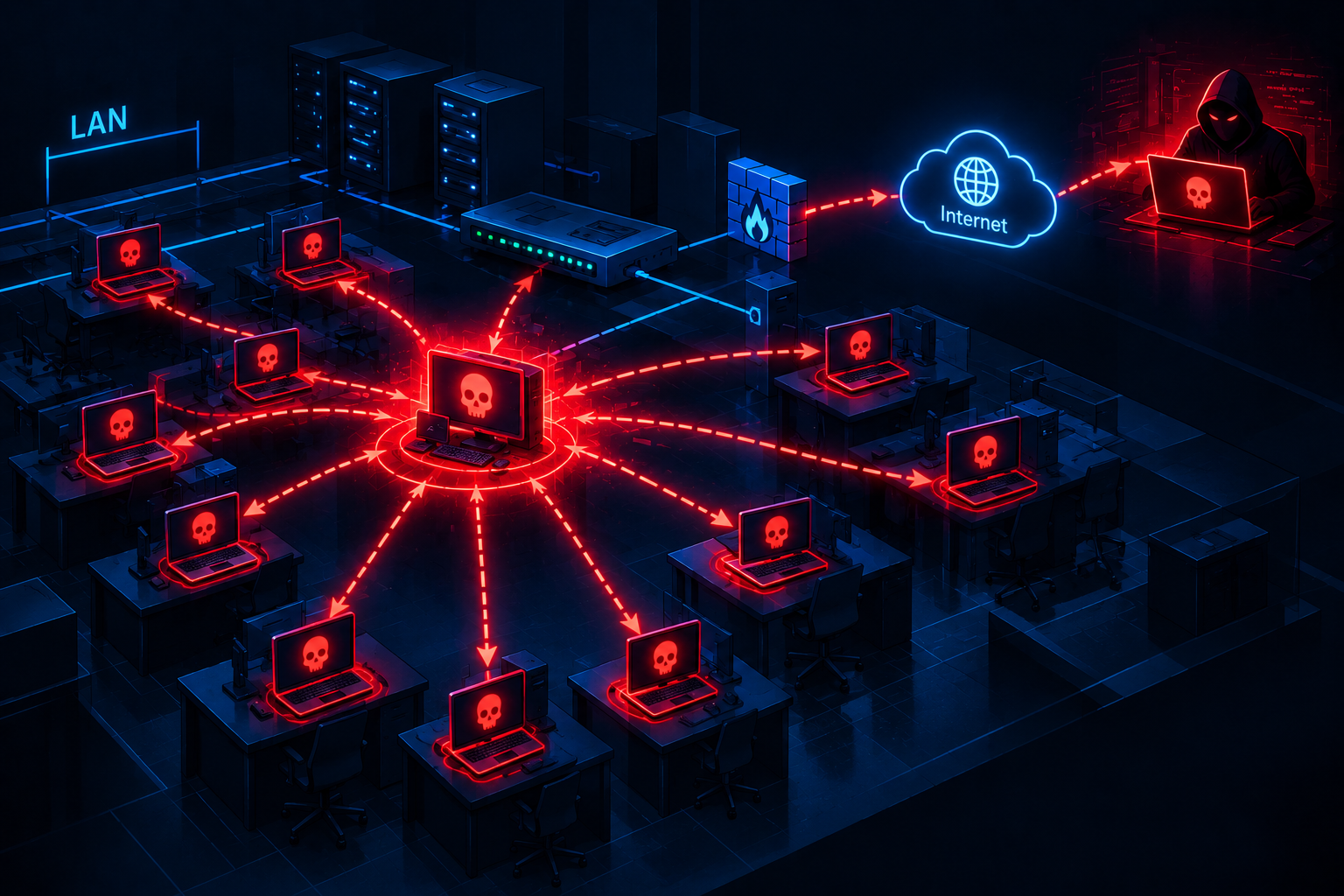
For telecom/critical-infrastructure operators, segment and monitor internal, non-internet-facing LAN segments — the Linux companion's LAN scan-and-infect capability specifically targets the network behind the perimeter.
References
- PwC — Inside Red Lamassu's JFMBackdoor
- PwC — IOCs (GitHub)
- Lumen Black Lotus Labs — Introducing Showboat
- Dark Reading — Chinese APTs Share Linux Backdoor in Telco Attacks
- Dark Reading — China Upgrades the Backdoor (BPFdoor / Red Menshen — comparison)
- The Hacker News — Showboat Linux Malware Hits Middle East Telecom